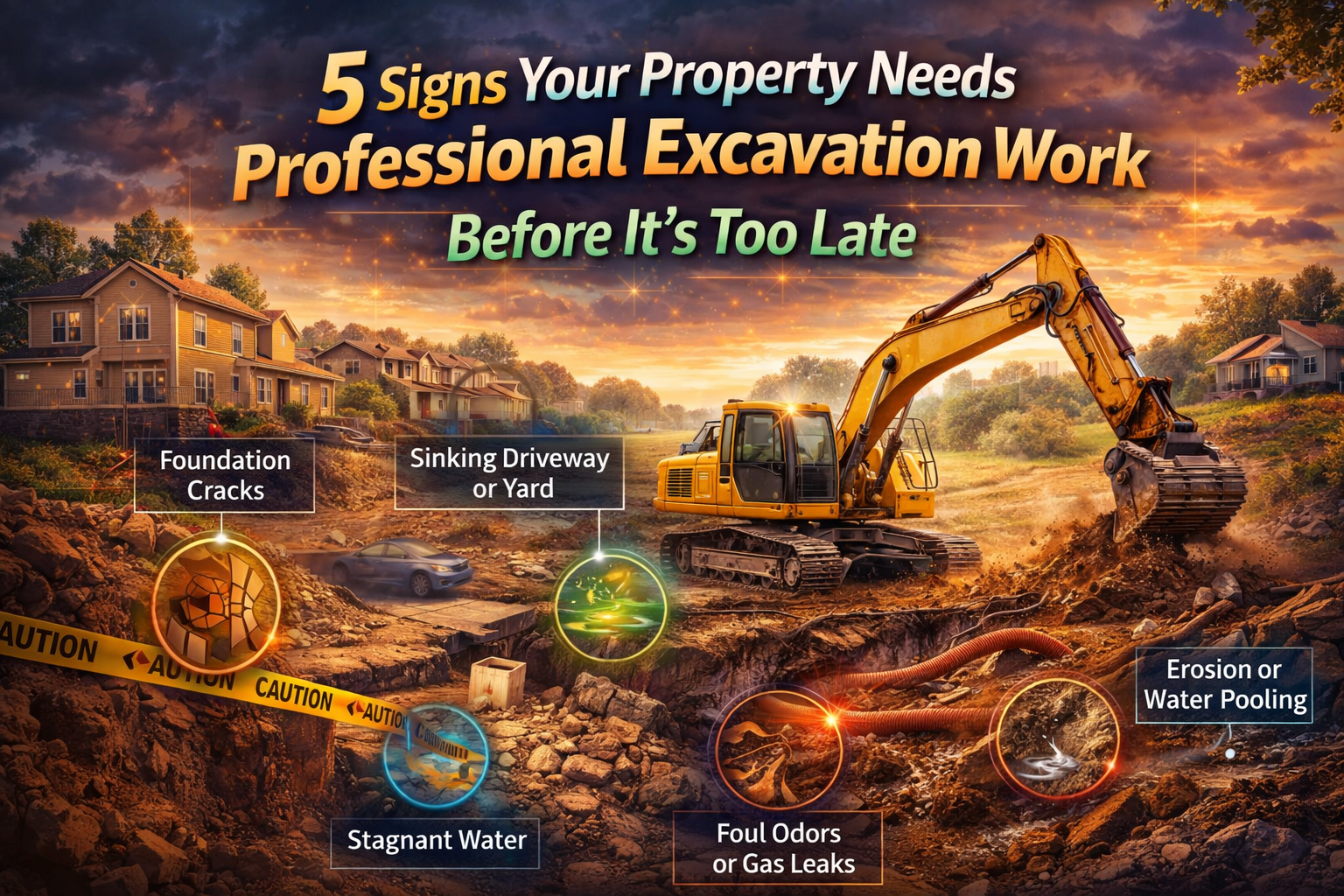
Most property owners don’t think about what’s happening beneath the surface until something goes wrong. A crack in the foundation. Water pooling where it shouldn’t. A driveway that started sinking six months after it was poured. By the time these problems show up, the damage is already well underway and the fix is almost always more expensive than the prevention would have been.
Excavation isn’t the glamorous side of property development or maintenance, but it’s the side that holds everything else together. Whether you’re planning new construction, expanding an existing property, or dealing with drainage issues that won’t quit, understanding when professional excavation is needed can save you thousands of dollars and months of headaches down the road.
Here are five signs it’s time to call in the pros.
1. Water Is Pooling in Places It Never Used To
Standing water after a rainstorm might seem like a minor inconvenience, but it’s usually a symptom of a grading problem. Over time, soil settles, shifts, and compacts unevenly. What was once a properly sloped surface can gradually become a low spot that traps water against your foundation, parking area, or walkways.
Left alone, pooling water accelerates erosion, weakens pavement, and creates the conditions for foundation damage that can compromise an entire structure. Professional excavation and regrading corrects the slope of the land so water moves away from buildings and paved surfaces the way it’s supposed to. It’s one of those fixes that feels invisible once it’s done but the absence of problems is exactly the point.
2. You’re Planning Any Kind of New Construction
This one sounds obvious, but you’d be surprised how many property owners jump straight to pouring concrete or laying asphalt without giving site preparation the attention it deserves. Every successful build starts with what happens underground. Clearing vegetation, removing debris, trenching for utilities, leveling the terrain all of it needs to happen before a single form gets set or a truck rolls in with material.
Skipping or rushing excavation work is one of the most common reasons new construction develops premature problems. Uneven settling, cracked slabs, drainage failures these almost always trace back to inadequate site prep. An experienced Excavating Contractor Avoca understands local soil conditions and terrain challenges, which makes a measurable difference in how the finished project performs over the long term.
3. Your Driveway or Parking Lot Is Cracking and Sinking
Surface-level patching can only do so much. When asphalt or concrete starts cracking in patterns especially along edges or in concentrated areas it’s often because the base beneath the surface wasn’t properly prepared or has deteriorated over time. Settlement, erosion, and root intrusion can all undermine the sub-base that supports your pavement.
In many cases, the most effective long-term solution involves removing the existing surface, excavating and recompacting the base material, and starting fresh. It’s more work upfront, but the result is a surface that lasts years longer and doesn’t require constant patching to stay functional.
4. You’re Dealing With Recurring Erosion
Erosion doesn’t just affect farmland and hillsides. Commercial properties, residential lots, and even flat terrain can experience persistent erosion when water flow isn’t being managed properly. If you’re noticing exposed roots, washed-out gravel, soil loss around foundations, or channels forming across your property after heavy rain, excavation work may be the only way to properly address the root cause.
Regrading, installing proper drainage channels, and reshaping the terrain to direct water flow are all excavation tasks that require heavy equipment and experience reading the land. Temporary fixes like adding fill dirt or building up low spots tend to wash out again within a season or two. A professional excavation approach addresses the underlying grade and drainage geometry so the fix actually holds.
5. Trees, Stumps, or Old Structures Are in the Way
Whether you’re clearing land for development or simply reclaiming usable space on your property, removing large obstructions is excavation work. Stumps with deep root systems, old concrete pads, abandoned utility lines, buried debris all of these require more than a chainsaw and a weekend of effort.
Professional excavation crews bring the right equipment and the experience to remove obstructions without causing collateral damage to surrounding infrastructure. They can also identify potential problems hidden underground old septic systems, buried tanks, unmarked utility lines that could turn a simple clearing job into a serious liability if handled carelessly.
The Common Thread: What’s Underground Matters Most
Every one of these scenarios points to the same fundamental truth about property ownership and development. The stuff you can’t see the grade, the drainage, the sub-base, the soil composition determines how well everything on the surface performs over time.
Excavation is the process of getting that underground reality right. It’s not flashy, and it doesn’t make for exciting before-and-after photos the way a fresh coat of asphalt or a new building does. But without it, those visible improvements are built on compromised ground.
The best time to address excavation needs is before they become emergencies. If you’re seeing any of the signs above, or if you’re planning a project that involves breaking ground, getting a professional assessment early is the smartest move you can make. The right excavation work done at the right time protects everything that comes after it and that’s a return on investment you’ll appreciate for years.